The wasteland is enchanted
Openness to ourselves is the first step toward communion with the world around us.
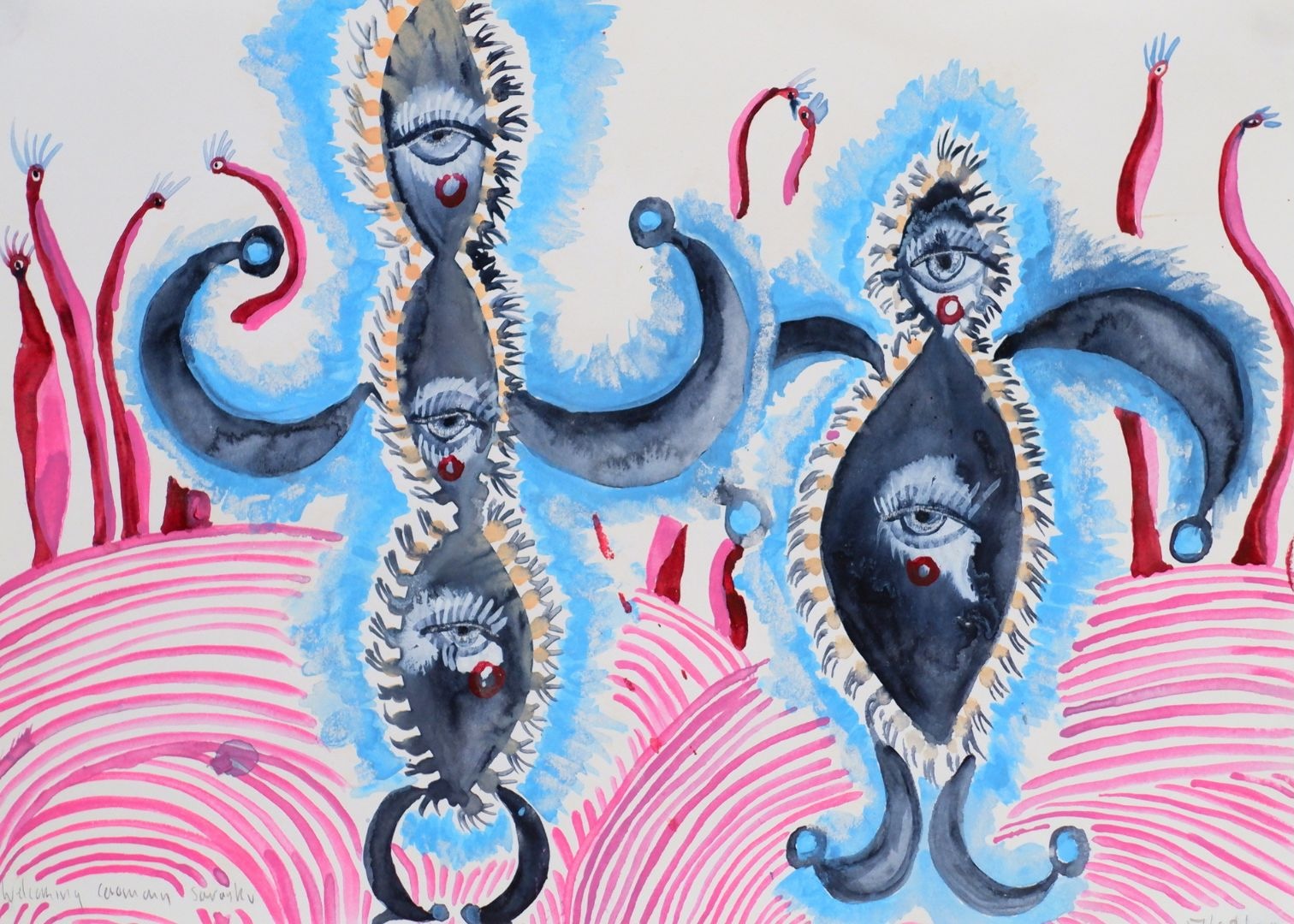
“There are no unsacred places. There are only sacred places and desecrated places.”
– Wendell Berry
How can I invite the aliveness and subjectivities of more-than-human beings to become real in my everyday experience, so that I may directly experience my interconnection with the expressive, animate powers of wind and water, hawk and hawthorn?”
During the past decade, a series of landmark cases around the world have granted legal personhood to forests, rivers, and other earthly presences, recognizing them as living beings and subjects of rights. However, as someone immersed in industrialized modernity—which considers nonhuman entities to be objects for human consumption and manipulation—legal personhood initially felt like an abstract idea to me. I wondered, how can I invite the aliveness and subjectivities of more-than-human beings to become real in my everyday experience, so that I may directly experience my interconnection with the expressive, animate powers of wind and water, hawk and hawthorn? Since we are living in a crisis not just of carbon but also of storytelling, let me address this with a story.
One slate-gray afternoon approaching deep midwinter, I’m walking a muddy chalk path that runs through an agricultural valley in southern England. The route I follow is segmented neatly into right angles, the lineaments of Cartesian logics imprinted on the body of the land. It isn’t long before a lump takes up residence in my throat, and a hardness closes on my chest. My mind becomes noisy and unrelenting, clamoring around Britain’s violent and patriarchal history of land dispossession, enclosure, and privatization. My thoughts lash and swirl: these hills have been scalped bare in the unfeeling clasp of metal and machinery—the fields hammered into crop monocultures that now sway listlessly in the wind!
This reaction is a familiar experience. Today, though, I hear another voice, soft and clear, cutting across the grooves of habitual thought. It is the call of the heart, beckoning me to see these surroundings, my external body, with eyes unclouded by hate. I breathe out. I don’t want to spurn desolation, wishing it into nonexistence while grasping after some idealized notion of beauty—these hills didn’t ask to be burned by chemical sprays, and the few remaining hawthorns are still living, breathing hawthorns. While I’m grateful for the creative organic energy of anger, this valley has suffered and needs me to bear it honest witness—to show it my compassion, not my scorn.
Jalaluddin Rūmī said, “the cure for the pain is in the pain.” I remember also the words of two interlocutors of Buddhist teachings (the dhamma). Pema Chödrön writes that compassion starts with a willingness to feel one’s own experience of the world, for what we reject in the encompassing world mirrors what we shut down within ourselves. And Tara Brach describes how a reaction to something outside ourselves—what someone might say, or what we may behold with our eyes and ears—is often more truly a reaction to a felt sense, arising from that stimulus, which ripples through our body.
I couldn’t bear the emotion that had arisen in me while moving through this valley: a hollow lifelessness, a heavy and dull pain, a blunt bleakness and despair.”
I realized then that the aversion I felt was not to the landscape as an entity external to and separate from me. Rather, I couldn’t bear the emotion that had arisen in me while moving through this valley: a hollow lifelessness, a heavy and dull pain, a blunt bleakness and despair. My inhospitability to this feeling had, like a drop of soap in a dish of oil, propelled my consciousness out of my organism and projected it onto my surroundings. Exiling itself from my body’s sensuous reciprocity with the enfolding terrain, my mind had become fragmented, dispersed, homeless.
Feeling my feelings, then, beneath the hate was anger, and beneath the anger was a simple, throbbing grief. Was this emotion mine, or the valley’s? I wasn’t sure, but in any case, I sensed the grief just wanted me to make space for it, to have the courage to be present to my feeling body and not pull away from what I would find there. I remembered the poet David Whyte once saying that the only choice we have as we mature is how we inhabit our vulnerability. I intuited then that a relation of care for this land and its wayward ghosts may arise if I could open to my own felt experience, whatever it may be, and hold it with kindness. So I try to direct a gentle attention to the storm within—this angry and unhappy knot in my chest and throat.
The crop fields and hedges of bramble and hawthorn were suddenly tender and familiar beyond comprehension, the valley an embrace of benevolence. The constructed thought-tower of my intellectual judgment and dissatisfaction melted away in the warmth of that love and belonging.”
Moments passed as I attended somatically to this feeling. I waited—and then, in an astonishing instant, the whole enfolding landscape transformed. Nothing was seemingly different to my eyes and ears, but the totality of my experience changed immeasurably. The crop fields and hedges of bramble and hawthorn were suddenly tender and familiar beyond comprehension, the valley an embrace of benevolence. The constructed thought-tower of my intellectual judgment and dissatisfaction melted away in the warmth of that love and belonging. I saw the wheat doing its wheat thing, the mud doing its mud thing, the gray cloud doing its gray cloud thing. They were no longer mute two-dimensional players in my human drama, but beings living their own life—strange, intense, unfathomable. Their otherness and subjectivities became real for me once I could step beyond my self-reflexive inner dialogue and engage their voices in conversation—not with verbal discourse, but by coming home to the body’s improvisational intelligence that never heeded modernity’s rift of separation between nonhuman and human.
A veil had lifted: I am not the only one here, but simply one locus of awareness in this great chthonic web of powers and presences. The world owes me nothing; it is all a gift. Even if this valley has been riven and wrought, and made harsh by the caustic speech of the nearby motorway, this is the earth as it is to me in this very moment, and it is my home.
And in that moment of openness to my own experience—an openness where the boundary between my heart and other beings grows thin—the living land, for once held by me with love, gave me these words:
The mundane and the sacred are one;
Just so are the inner and outer worlds.
The wasteland is en-chanted;
It is chanting the dhamma.

