Saving the whales may save us: How whales bring communities together
Migratory orcas form communities in the face of incredible obstacles. Can they show us ways to find one another as well?
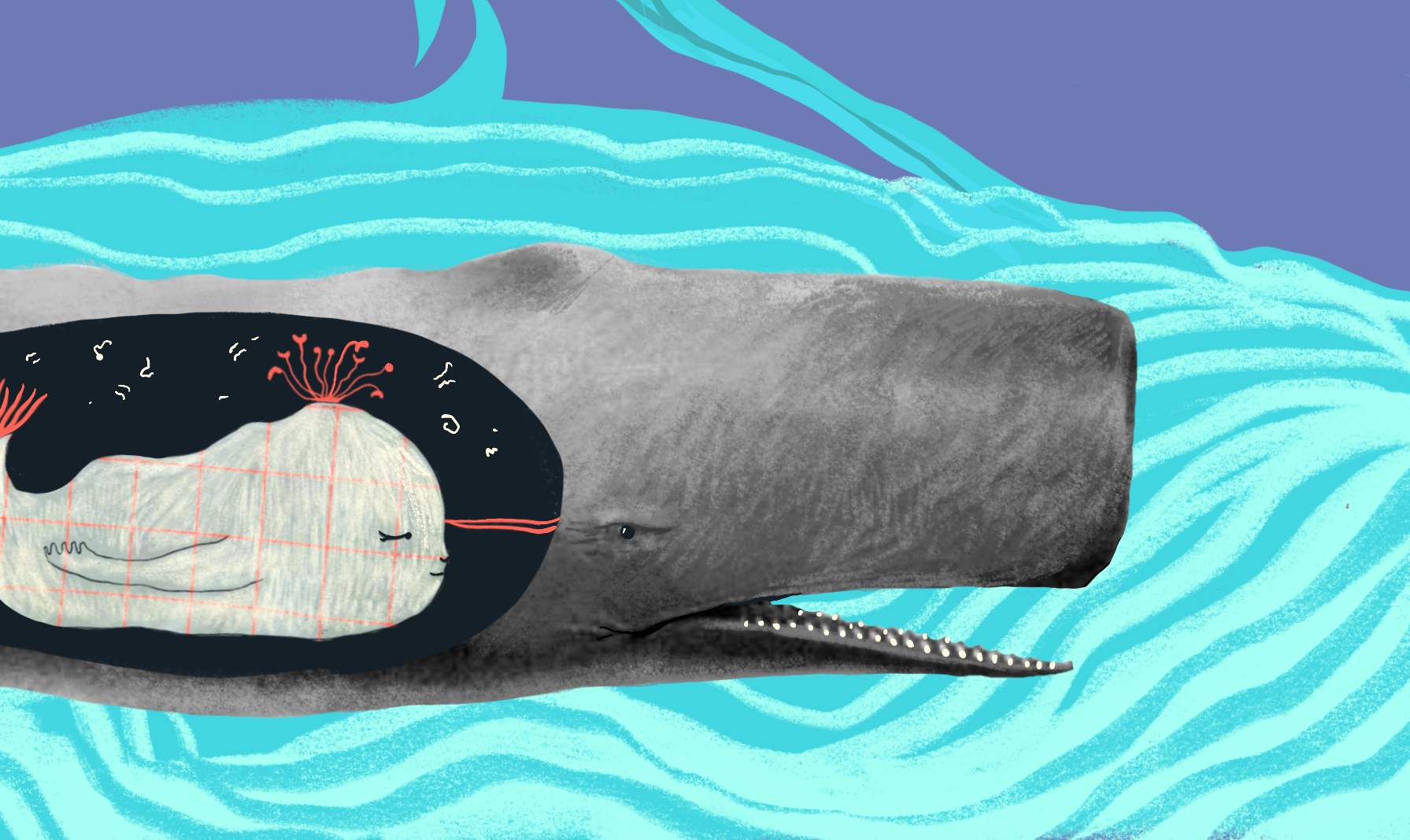
In the heavily trafficked waters of the Salish Sea, off the coast of the Pacific Northwest, there is a clan of endangered orcas. Known as the Southern Resident Killer Whales (SRKW), this clan comprises three tight-knit matriarchal pods swimming between California and British Columbia. When these endangered orcas cross paths, they recognize their larger familial clan, becoming excited and vocal, chattering and squealing. This is the opening of a special tradition we humans recognize as a “greeting ceremony.” Next, each orca lines up with their pod, and the pods face each other across the surface’s choppy waters. Then, following a cue unknown to scientists, the group dives in synchronicity, slipping into the sea.
Like the orcas, humans are attempting to come together despite immense obstacles. In times of climate crises, pervasive armed conflict, and political dysfunction, we humans nevertheless continue to work towards common goals.”
Like the orcas, humans are attempting to come together despite immense obstacles. In times of climate crises, pervasive armed conflict, and political dysfunction, we humans nevertheless continue to work towards common goals. In the Pacific Northwest, one goal is intimately tied to more-than-human life: here, residents from all walks of life feel compelled to care for the SRKW’s survival.
Calming the waters
In the Pacific Northwest, it is well known that before the twentieth century, there were around 200 members of the SRKW. Now, only 74 remain. While commercial hunting is no longer legal, and they are no longer captured and sold to aquariums, these endangered orcas still face many threats. One issue receiving significant attention is the physical and acoustic disturbance of marine vessels along the busy ports of the West Coast, which interferes with marine life’s ability to communicate. These disturbances make it difficult to navigate and hunt, and leave the orcas disoriented and straining to hear one another.
Southern Resident orcas’ intimate, social nature means that vocalizations are key to their survival. A single call can convey which pod someone belongs to and can identify individuals. The noise of nearby vessels also impacts pregnant and new mothers’ ability to hunt. The consequences are dire, including low birth rates and frequent failed pregnancies—in 2018, one of the clan’s more famous members, Tahlequah, carried her deceased calf, Tali, 1,000 miles over 17 days. She gave birth again in 2024, and again, her calf did not survive.
Quiet Sound, a nonprofit based in Seattle, advocates for calmer waters amid the many vessels that continue to navigate the narrow channels of the Puget Sound. Quiet Sound brings together federal, state, and tribal governments, research and nonprofit groups, and industry stakeholders. Working across sectors, they’ve brought together actors with different (often competing) interests to advocate for reduced vessel speed in the presence of orcas, decreasing noise and the potential for ship strikes.
One of Quiet Sound’s initiatives, the Whale Report Alert System (WRAS), consolidates real-time data from multiple cetacean detection platforms, including the Whale Report app, hydrophones, and an infrared camera. When orcas are present, a notification is disseminated to nearby vessels, which can opt to slow down.
But researchers and Indigenous tribes are concerned about projected increases in the number of vessel transits. There are currently 23 proposed terminal or refinery projects in the Salish Sea, and even if only ten were approved, they could add at least 2,000 vessel trips along the seaports per year.
Some advocate for quieter engines to reduce harm, but this only addresses part of the dynamic, complex set of problems created by a growing maritime economy.”
An entangled network
Some advocate for quieter engines to reduce harm, but this only addresses part of the dynamic, complex set of problems created by a growing maritime economy. The Salish Sea is not wide open; it is a delicate ecosystem of narrow channels that can be tricky to navigate for whales and humans alike. Indigenous tribes, for example, are worried about how increasing traffic will affect their own safety on the waters.
While scientists have collected information on the SRKW since the 1960s, institutionalized science is only one way of listening. Numerous Indigenous peoples, including the Lummi Nation, Tulalip, Suquamish, and others, have deep ties to these orcas and their main food source, salmon. Their hunting practices have necessitated a keen knowledge of the orcas, including their cultures, needs, and tendencies. These Indigenous groups, too, are embroiled in the larger economy, yet they have fought the Trans Mountain pipeline, which will bring more traffic to the Salish Sea, and are working to restore salmon populations.
The challenges faced by the SRKW and other inhabitants of the Salish Sea cut deeper than purported technological solutions. Still, the blue economy, collectives exploring more sustainable economic growth, is experimenting with numerous projects to alleviate problems caused by economic expansion and globalization. Yet there is no solution that does not create new problems—one purported solution has been for vessels to adopt scrubbers to reduce air pollution. Those same scrubbers, however, produce acidic and toxic wastewater, which further harms salmon and exacerbates the accumulation of toxins among endangered orcas. While it would be unfair to focus solely on scrubber discharge, far from the only source of pollution, it is necessary to highlight how action can create new problems. We may need an approach that gives diverse actors a respected voice, with the goal of moving beyond circular impasses in order to center the orcas’ survival.
The promise of slow science
Consider Isabelle Stengers’s call for “slow science,” which pushes against acceleration and advocates for a “cosmopolitical” conversation that can include doubt, hesitation, and situated collaboration. This approach requires that the conversation is not driven by monetary or corporate incentives. While Stengers does not require economies to halt, her proposal invites a slowing down to explore and imagine alternative ways of doing and gathering. In Research is Ceremony, Shawn Wilson similarly decenters economic priorities by proposing that knowledge practices are obligations within relationships, and ethical responsibilities are embedded within research processes. Ceremony is a strong act.
Perhaps we ought to begin as the orcas begin: from a place of recognition in the very act of meeting. Slowing down to recognize the momentous challenge of simply coming together may be a necessary first step toward taking more-than-human lives seriously.”
Quiet Sound has taken a strong step forward by facilitating this conversation, though there remains an uneven distribution of power at the table. Now that one nonprofit has begun, what will it take to recognize how dynamic imbalances remake themselves? Perhaps we ought to begin as the orcas begin: from a place of recognition in the very act of meeting. Slowing down to recognize the momentous challenge of simply coming together may be a necessary first step toward taking more-than-human lives seriously.
This recognition of interdependence must be ingrained in our actions and way of life. Our entanglements demand alternative models of working together. Why not consider each interaction an invitation to create ceremonies that elevate relationships over economic priorities? Such recognition signifies and actualizes the respect required for meaningful collaboration.

