Purpose, place, and Indigeneity
Indigeneity is a relational ontology, a reclaiming of ecological belonging, and the antidote to modern desire
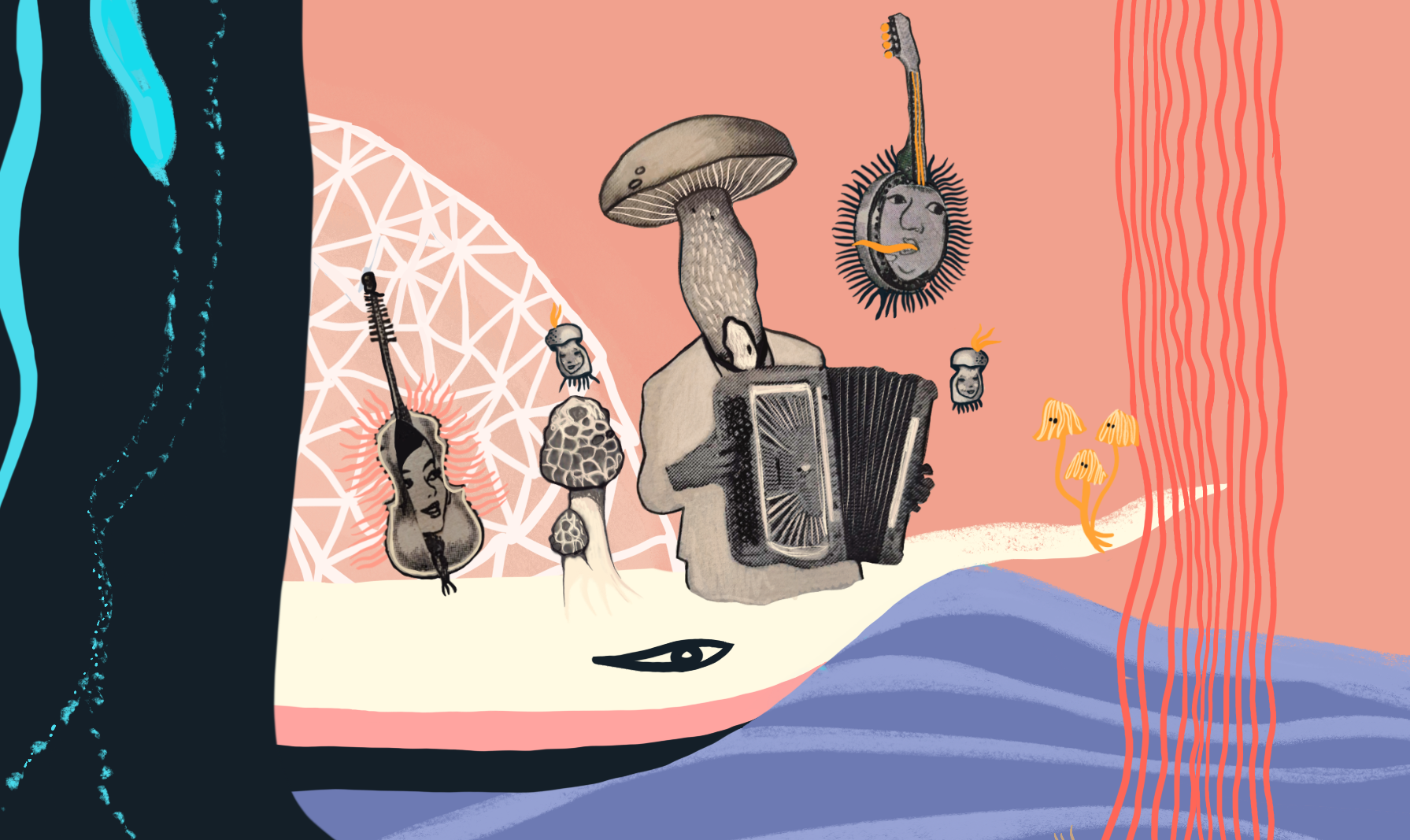
Jazz emerged from catastrophe. Displaced, scattered, stripped of homeland, African peoples in the Americas built something no one planned: a living tradition of creative adaptation, a way of sustaining connection to ancestral wisdom while growing roots in unfamiliar soil. Cultural theorist Homi Bhabha calls this process syncretism. Blues, Afro-Caribbean spiritual traditions, and the devotional music of African diasporic communities across the hemisphere are all vital responses to rupture. They are reorganizations of purpose in new ecological contexts. Consequently, Joshua Schrei calls jazz “the greatest Pan-American sensemaking project in history.”
Speaking from a position of displacement
The land-based traditions my ancestors practiced are largely gone, not because I left their homelands but because modernity severed our relationship long before I was born.”
I write from inside a version of this displacement. I am Brazilian, Swedish, and Swiss, raised across continents, shaped by some migrations I did not choose and others that I did. The land-based traditions my ancestors practiced are largely gone, not because I left their homelands but because modernity severed our relationship long before I was born. This displacement touches nearly everyone alive: you can stand on your ancestral soil and remain estranged from the relational ways of knowing that once made it home. As a result, I have been drawn for years to Indigenous scholars whose frameworks have changed how I inhabit the places where I actually live, and what follows is shaped by their work and by the slow, ongoing practice of learning to belong to a specific watershed, a specific community of soil and stone and creek.
Most of us share some form of this estrangement. Colonialism, catastrophe, and economic pressure have scattered human communities across the globe for centuries. Even those who remain in their ancestral territories often find themselves estranged from the living traditions that once defined life there. In his book, The Voice of the Earth, ecopsychologist Theodore Roszak documented the link between environmental destruction and rising rates of anxiety, depression, and alienation. The destruction of nature and the wounding of the human psyche are one phenomenon with two faces, what Daniel Schmachtenberger and others call the metacrisis.
Indigenous thinkers offer a framework for understanding why.
Indigenous consciousness
Vanessa Watts, an Anishinaabe-Haudenosaunee scholar, describes “place-thought”: the understanding that land is itself alive and thinking, and that humans are expressions of that thought. If Watts is right, purpose is something we receive from the places that think us into being.
Leanne Betasamosake Simpson, a Michi Saagiig Nishnaabeg writer, deepens this view by insisting that such knowledge grows from generations of attentive relationships with particular rivers, forests, and seasons—it cannot be abstracted from place. Knowledge, in Simpson’s telling, is a living thing, grown in the soil of sustained attention.
Enrique Salmón, a Rarámuri scholar, names this “kincentric ecology”: a worldview in which humans are kin, bound by mutual obligation and affection to every other participant in the living system. Within kincentric ecology, purpose becomes ecological. The question shifts from “What makes me happy?” to “What does my place need from me?”
What these scholars point toward, each from their own tradition, is something I have come to think of as Indigenous consciousness: a mode of awareness in which the boundary between self and world grows thin, in which attention to place becomes participation rather than observation. It is the ordinary awareness of someone who has spent enough time with a particular creek to notice when its water changes color after the rain; someone who knows which birds arrive first in spring and what their arrival means for the plants that depend on them.
The question is whether we can recover this relational awareness without reducing it to another form of consumption—another self-improvement project extracted from traditions for which we have little context today, whether in terms of community relations, connections to the land, a lineage of practice, or the accountability structures that keep this knowledge alive and honest.”
For modern readers living in cities, working in front of screens, eating food grown on continents they will never visit, this awareness can feel impossibly remote. And yet the longing for it surfaces constantly—in the popularity of foraging and birdwatching, in the migration toward regenerative agriculture and bioregional education, in the quiet epidemic of people quitting stable careers to work with the soil. These are symptoms of a species remembering its origin and purpose. The question is whether we can recover this relational awareness without reducing it to another form of consumption—another self-improvement project extracted from traditions for which we have little context today, whether in terms of community relations, connections to the land, a lineage of practice, or the accountability structures that keep this knowledge alive and honest.
Robin Wall Kimmerer, a Potawatomi botanist, has built an institutional practice around this shift. Her Center for Native Peoples and the Environment pairs Indigenous knowledge with Western ecological science, training students in what she calls the Honorable Harvest: take only what you need, reciprocate the gift, practice restraint as a discipline of attention. “All flourishing is mutual,” she writes. On the Klamath River in northern California, the Karuk Tribe leads prescribed fire training exchanges where non-Indigenous practitioners learn alongside Karuk elders on the land. Bill Tripp, the Tribe’s director of natural resources, learned cultural burning from his great-grandmother at age four. Over 80% of the Karuk Tribe’s cultural and medicinal plants depend on fire. These are working partnerships in which Indigenous communities retain authority while inviting others to witness and learn.
Toward new forms of belonging
Can displaced peoples develop a genuine sense of belonging in places their ancestors never knew?
Tyson Yunkaporta, of the Apalech Clan in Queensland, writes in Sand Talk: “The work is right in front of you.” He extends an explicit invitation: the relational work of learning to belong to a place is available to anyone willing to begin. This process is different from claiming an Indigenous identity, a category with specific legal and political standing under international law. It means developing the capacity for relationships that colonization interrupted in all of us: learning the watershed, greeting the beings who share our places, building traditions of reciprocity appropriate to where we actually live.
The path toward ecological belonging asks us to sit with this tension rather than resolve it, to show up, again and again, to the places we inhabit; to listen before we speak; to give before we take; to remember that we are not owners but guests, not masters but kin.”
Victor Steffensen, a Tagalaka cultural burning practitioner in Australia, names the tension honestly: when non-Indigenous organizations take Indigenous knowledge and “dictate how it should be done, it’s no longer cultural burning.” In short, the knowledge is inseparable from the relationship—extracting technique from ontology reproduces the very severance the work is meant to heal.
The path toward ecological belonging asks us to sit with this tension rather than resolve it, to show up, again and again, to the places we inhabit; to listen before we speak; to give before we take; to remember that we are not owners but guests, not masters but kin. In learning to live in reciprocity with the more-than-human world, we may finally answer the hunger that wakes us at three in the morning.
We may finally come home.

