Hold my hyphae: A legal response to fungal invisibility
Without fungi, ecosystems would collapse. It’s time conservation laws recognize their role.
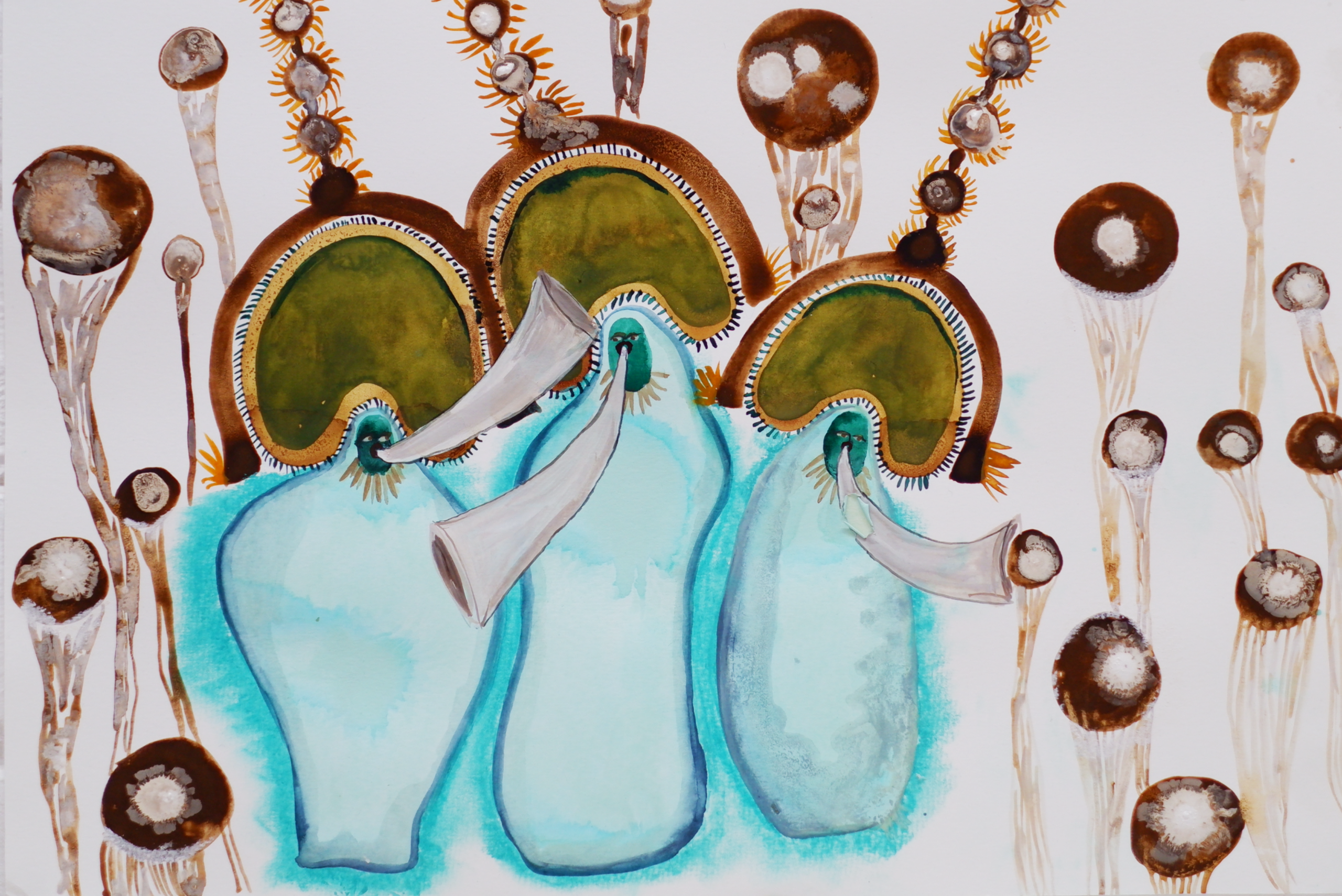
Without fungi, whole ecosystems would fail. They are essential to plant health, ecosystem function, and—ultimately—human survival. As mycologists Giuliana Furci and Merlin Sheldrake put it: “Accounts of the living world that do not include fungi are accounts of a world that doesn’t exist.” Yet environmental laws and conservation policies continuously ignore fungi, despite their fundamental importance.
Accounts of the living world that do not include fungi are accounts of a world that doesn’t exist.”
For centuries, fungi were considered simple or lower plants. It wasn’t until 1969 that ecologist Robert H. Whittaker recognized fungi as a distinct biological kingdom. In his paper, “New Concepts of Kingdoms of Organisms,” Whittaker argues that the prevailing plant-animal dichotomy reflects a narrow human perspective. Indeed, fungi have always resisted strict classification, the limits of sectoral thinking, and conventional scientific methods—particularly those relying on visual observation and quantification.
Fungi are everywhere: from glaciers to tropical rainforests, from ocean floors to cow stomachs. They even thrive inside Chernobyl’s damaged reactor. And yet, they remain cryptic, extraordinarily difficult to detect and count.
Most fungi remain concealed within ecosystems. Some are single-celled and microscopic; others form vast underground networks—mycelia—made of long, branching, threadlike tubes known as hyphae. Mycelia stay hidden in soil or organic matter, surfacing only occasionally as the mushrooms we all know. Their elusive nature has led many people, including scientists, to dismiss fungi as nothing more than background noise in ecosystems. Consequently, approximately 95% of an estimated 2.5 million fungal species—a kingdom far richer in species than that of plants—remain unknown to science. Environmental law and conservation policy mirror this scientific gap, leaving fungi largely absent from environmental decision-making. Calling this oversight the “elephant in the room” would be an understatement.
The numbers tell a stark story. To understand how fungi fare in species conservation, refer to the International Union for Conservation of Nature’s Red List of Threatened Species. Inclusion on the Red List elevates any species on the conservation ladder, often unlocking access to funding. Until 2003, fungi were completely absent from the Red List. As of 2014, the list only included three species. By May 2025, that number has climbed to 1,300. While this 43,000% increase over the past decade reflects growing and welcome momentum, fungi still are dramatically underrepresented when compared to the tens of thousands of listed plant and animal species.
[A]pproximately 95% of an estimated 2.5 million fungal species—a kingdom far richer in species than that of plants—remain unknown to science. Environmental law and conservation policy mirror this scientific gap,
This problem extends beyond the Red List. Fungi are entirely absent from the appendices of the Convention on International Trade in Endangered Species of Wild Fauna and Flora (CITES): a foundational international agreement regulating wildlife trade. While in 2002 the Conference of the Parties to the Convention formally stated that fungi are “covered by the Convention,” this has resulted in no material impacts. Similarly, the Habitats Directive—a cornerstone of the European Union’s nature conservation legislation—has operated on an outdated dual kingdom model, entirely omitting fungi, since its adoption in 1992. The pattern repeats across many other nature protection laws.
These legal omissions demand correction. Encouragingly, efforts to change course are emerging. In 2024, at the 16th Conference of the Parties to the Convention on Biological Diversity (CBD COP), the governments of Chile and the United Kingdom introduced the Fungal Conservation Pledge, which calls for integrating fungi into global conservation frameworks.
Yet even these changes may fall short if they attempt to squeeze fungi into conservation models built for animals and plants. To begin, these existing models haven’t proven successful—biodiversity is declining faster than at any time in human history. As Klaus Bosselmann observes, although environmental law can save some trees, it is losing the forest. In addition, fungi are integral to ecosystems, fulfilling their roles through mechanisms fundamentally different from those of plants and animals. It would be neglectful to assume that conservation concepts can simply transfer across kingdoms. Finally, effective fungal conservation based on existing models demands extensive knowledge of the biology of individual species, and this knowledge is still largely unavailable. The specific roles that individual fungal species play in most ecosystem processes remain poorly understood.
Rather than trying to adapt familiar but inadequate templates for fungi, we should accept their invitation to expand our legal approaches to the protection of nature.
Here, fungi’s talent for connection comes to the forefront. Fungi build networks, and through these networks, they communicate, exchange resources, and support the resilience of entire ecosystems. Consider mycorrhizal fungi and plants, intimately bound with one another in ancient, reciprocal partnerships spanning nearly 450 million years. Today, over 90% of terrestrial plants depend on these relationships to access water and nutrients. But fungal alliances go far beyond plants; fungi partner with algae and bacteria to form lichens and serve as key components of countless animal guts, including human microbiota. The strength of fungi lies in collective action and relationship-building across the Tree of Life. Legal and management strategies to protect fungi must recognize this.
How could this be done? Conservation laws and policies must shift their focus from isolated species to the relationships that sustain ecosystems. We should ask: how can our practices better support mutualisms like those between fungi and plants? How can we protect the collective labor fungi provide to other organisms, such as decomposing deadwood or cycling nutrients? And how can we assess human impacts to account for these hidden but essential connections?
Rather than trying to adapt familiar but inadequate templates for fungi, we should accept their invitation to expand our legal approaches to the protection of nature.
Such relationship-based conservation is not fanciful—it is grounded in existing policies like the ecosystem approach promoted under the CBD. This approach recognizes the functional relationships that sustain an ecosystem and how each part is linked to processes occurring across time and at different scales. It challenges sectoral, fragmentary environmental lawmaking and instead encourages the integration of different strategies, including protected areas and species-based conservation. For the protection of fungi, the ecosystem approach and its emphasis on relationships is not only the best approach—it is the only option.
Fungi can serve as a paradigmatic case for reimagining conservation through the lens of interdependence. By blurring boundaries between individuals, distinct species, and even kingdoms of life, they remind us that full autonomy is an illusion. Their collective work undergirds life on Earth. It is time our laws evolved to match this reality.

