Extending creativity for MOTH life: Lessons in co-creative trust
By listening to our invertebrate kin, we can restore relationships and earthly interconnections for a deeper coexistence.
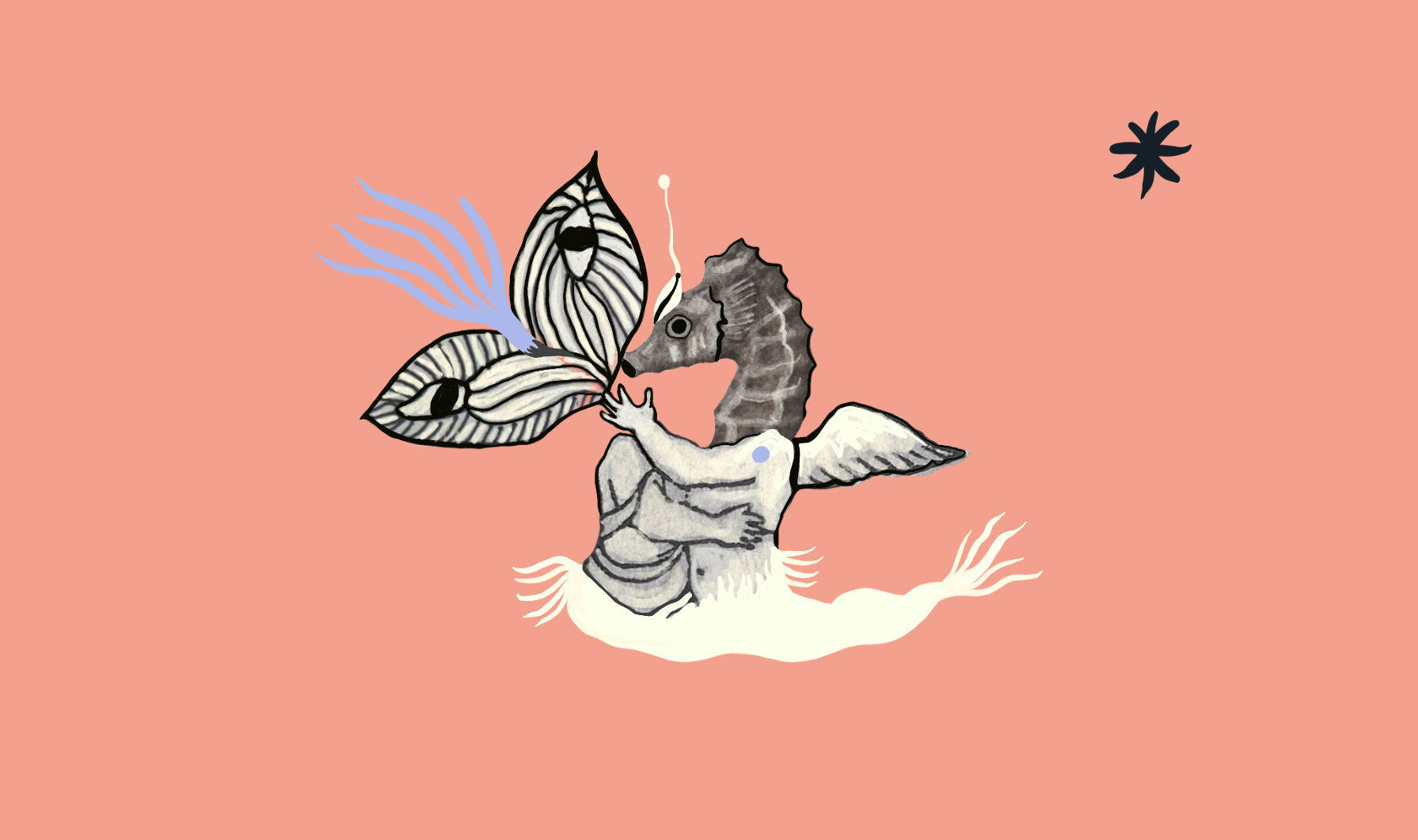
“Great artists steal” is a popular adage, but what if artists returned to nature what they take for inspiration?
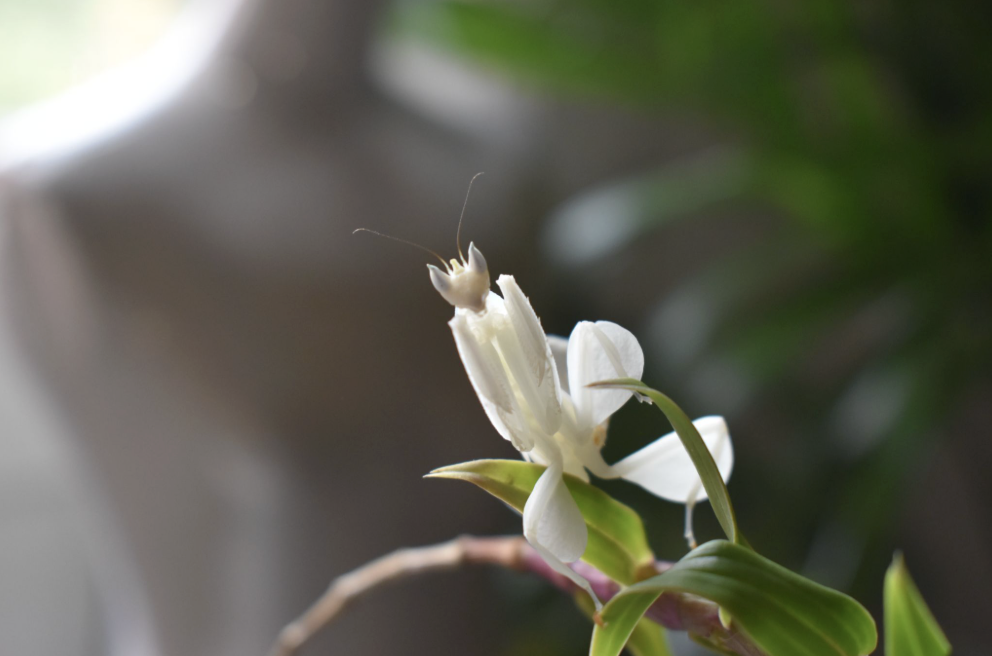
In my early twenties, I was a praying mantis caretaker. I maintained ecosystems within vivariums for two species: Idolomantis diabolica, the devil’s flower mantis of East Africa, and Hymenopus coronatus, the orchid mantis of Southeast Asia. Both of these mantids possess the uncanny ability to mirror the flowers and foliage of their respective environments. Orchid mantises even modify their appearance based on their immediate surroundings. Their imitative movements recall a kind of dance only the wind can choreograph.
A bond that grew through injury and recovery
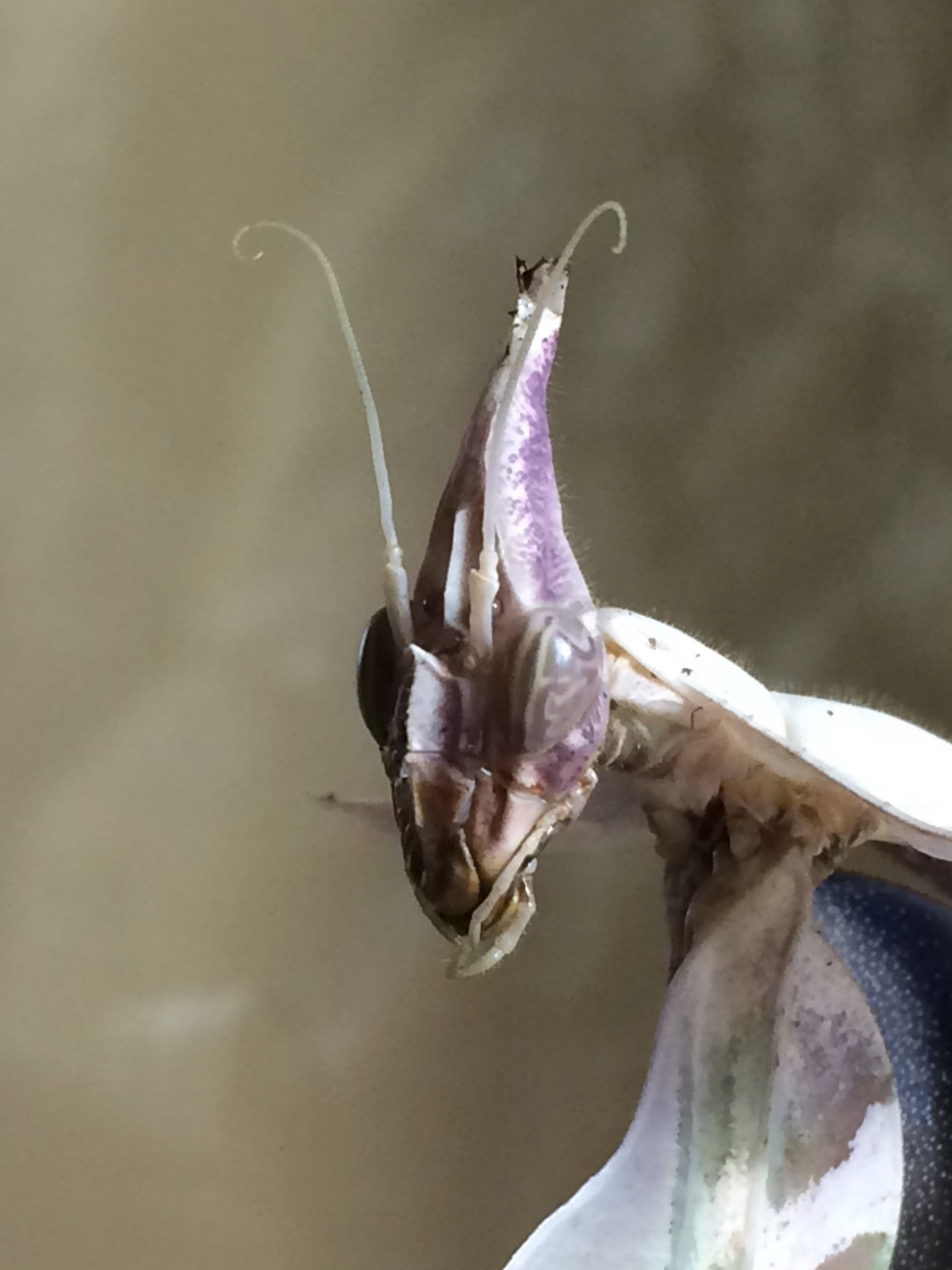
Pandora was an Idolomantis who fell and was injured during her final molt into adulthood—the stage when mantids get their wings. Members of her species typically experience either eight or nine developmental stages or “instars”—females go through an extra molt. They leave behind their previous shape from each molt as an exuvia, or shed skin. Pandora’s fall resulted in the loss of one of her legs and irreversible damage to her raptorial claw. Her freshly acquired wings were slightly crumpled from the impact when she hit the soil, but she could still fly.
Praying mantises are known as masters of mimicry, and this attentiveness influenced how I approached helping Pandora to recover.”
Praying mantises are known as masters of mimicry, and this attentiveness influenced how I approached helping Pandora to recover. Her red and brown coloration resembled the autumn leaves of the deciduous trees where I lived, and the leaves and twigs of these trees provided welcome privacy and camouflage within her vivarium ecosystem. The artistry of Pandora’s mimicry inspired me to fashion a prosthetic leg from the stem of one of these dried leaves. Patient and calm, she allowed the prosthetic to be attached with a water-based adhesive so that it could balance the weight of her body.
After her injury, Pandora could no longer grasp and capture prey independently. Our relationship had grown into a bond over nearly a year of her life span, and she began to recognize my particular human shape. Using long tweezers, I fed her houseflies and supplemental honey. These daily hand feedings continued for weeks, and soon she was able to hold her own prey again.
Poetry in captivity
Like many figures associated with the Surrealist movement, I was in awe of the praying mantis. Sociologist Roger Caillois, a colleague of dissident Surrealist Georges Bataille, influentially remarked on their power over the human imagination in his essay “The Praying Mantis: From Biology to Psychoanalysis,” and near the end of his life he wrote: “In my opinion, it would diminish poetry to view it as a luxury or fantasy of the human species alone.” In my opinion, Pandora’s life was poetry. And my own artistic practice reflected this when I later developed cyanotypes of the molts she and other mantids left behind.
In my opinion, Pandora’s life was poetry. And my own artistic practice reflected this when I later developed cyanotypes of the molts she and other mantids left behind.”
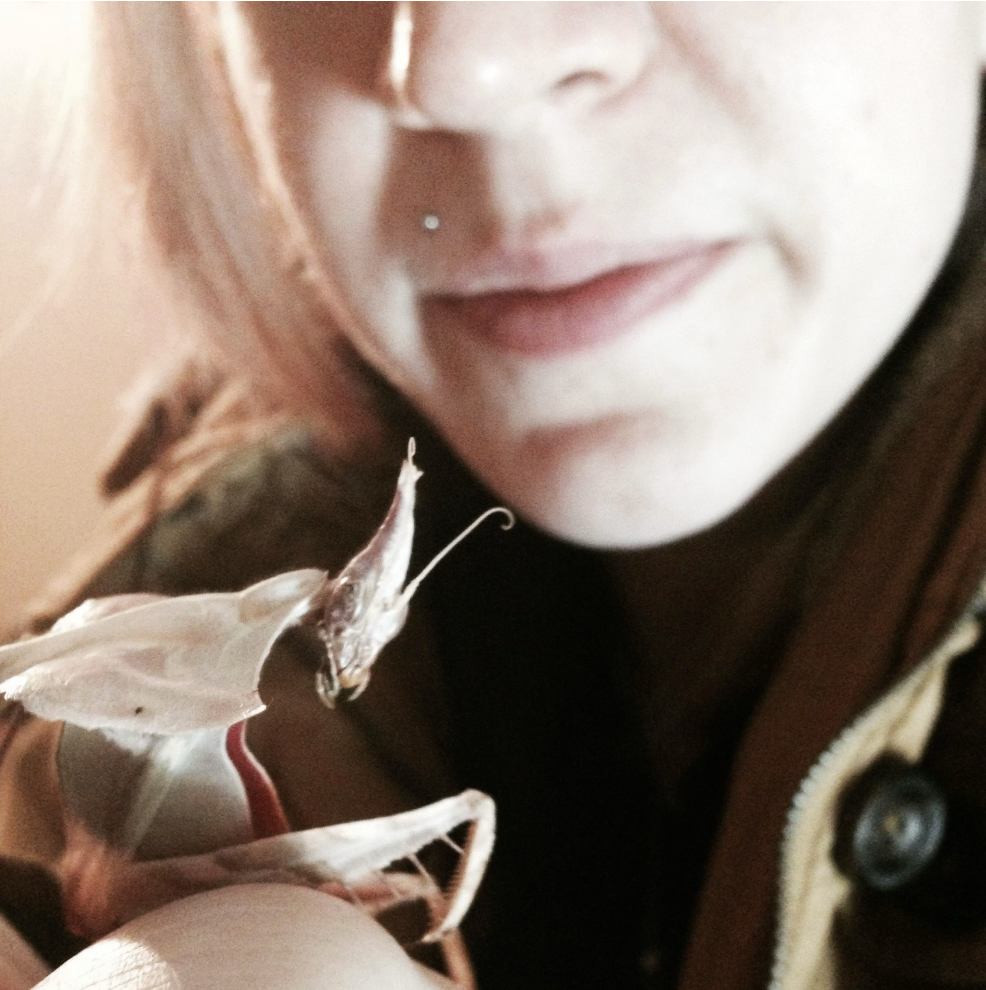
Pandora initially learned to trust me as a consequence of the controlled environment I created, but as our relationship deepened, she chose to climb freely onto my palm and rest there. Surrealist painter and novelist Leonora Carrington felt she could reach animals “through the skin, by means of a sort of ‘touch’ language,” echoing the way Pandora and I communicated. Most of the mantids I cared for would methodically clean their limbs after contact with skin oils, but not Pandora. She spent her last moments softly folding into my hands, and I miss her spirit to this day. As my last Idolomantis, she taught me to leave behind my previous shape. I learned to recognize my own human failure: keeping animals, no matter how small, in captivity to appreciate them.
Animal captivity is often touted as a protective measure in aid of species preservation or proliferation, but the wild cannot be replicated in a laboratory. Increasing life span at the cost of freedom is not evidence of success. When we eradicate predators in the wild, we replace them ourselves. Pandora’s species belongs at home in East Africa, not in my vivarium; now, whenever I encounter a praying mantis in the wild, I remember her.
Protective concealment, used and misused
Humans have long appropriated the camouflage tactics of other animals as a military technology. For example, in 1940, Zoologist Hugh B. Cott’s Adaptive Coloration in Animals was mass-produced as a pamphlet for the kitbag carried by British soldiers. Surrealist “camoufleurs” in England formed the Industrial Camouflage Unit to improve upon this deceptive artistry for warfare, and a similar program was established at Pratt Institute. Today, the United States Marines provide camouflage training classes for their recruits, and snipers wear ghillie suits to blend in with their combat environments.
But at the same time, protective concealment presents an opportunity for human rewilding efforts.
The Biomimicry Institute asks nature for the solutions to biodiversity loss. In collaboration with eco-artists, urban green spaces can be designed to prioritize the preferences of more-than-human beings by providing places to hide that encourage their flourishing. Gardens and parks can be modeled after woodlands and meadows. Watersheds can be made more hospitable for the lives of invertebrates, themselves a good sign for the quality of water that sustains all life.
I no longer hold praying mantises in captivity, but I carry on their lessons and share their stories.”
For example, a creative initiative to conserve the Schuylkill River involves collaborating with freshwater mussels, who act as natural filters, feeding on contaminants. Fairmount Water Works is reintroducing these native species to the Manayunk Canal and opening the locks for a free-flowing, thriving river. These waterways have been heavily polluted as a consequence of their location in the city of Philadelphia—once an industrial center called the “workshop of the world.” When I volunteer to clean up and rewild the canal, I co-create with my mussel community.
Learning to begin again
I no longer hold praying mantises in captivity, but I carry on their lessons and share their stories. By exploring the complex tensions inherent in conservation science, we can adapt more-than-human insights to whatever fields of study we work in.
We can listen to our insect kin and “give on,” as Robert Macfarlane suggests, rather than stealing their survival tactics for warfare and destruction. Together, we can begin again. After all, “love” and “art” are an anagram for “a revolt.”

