Body as earth: More-than-human ontologies among the Mẽbêngôkre
Where animals are relatives and plants make up the body, environmental devastation is an ontological rather than external threat.
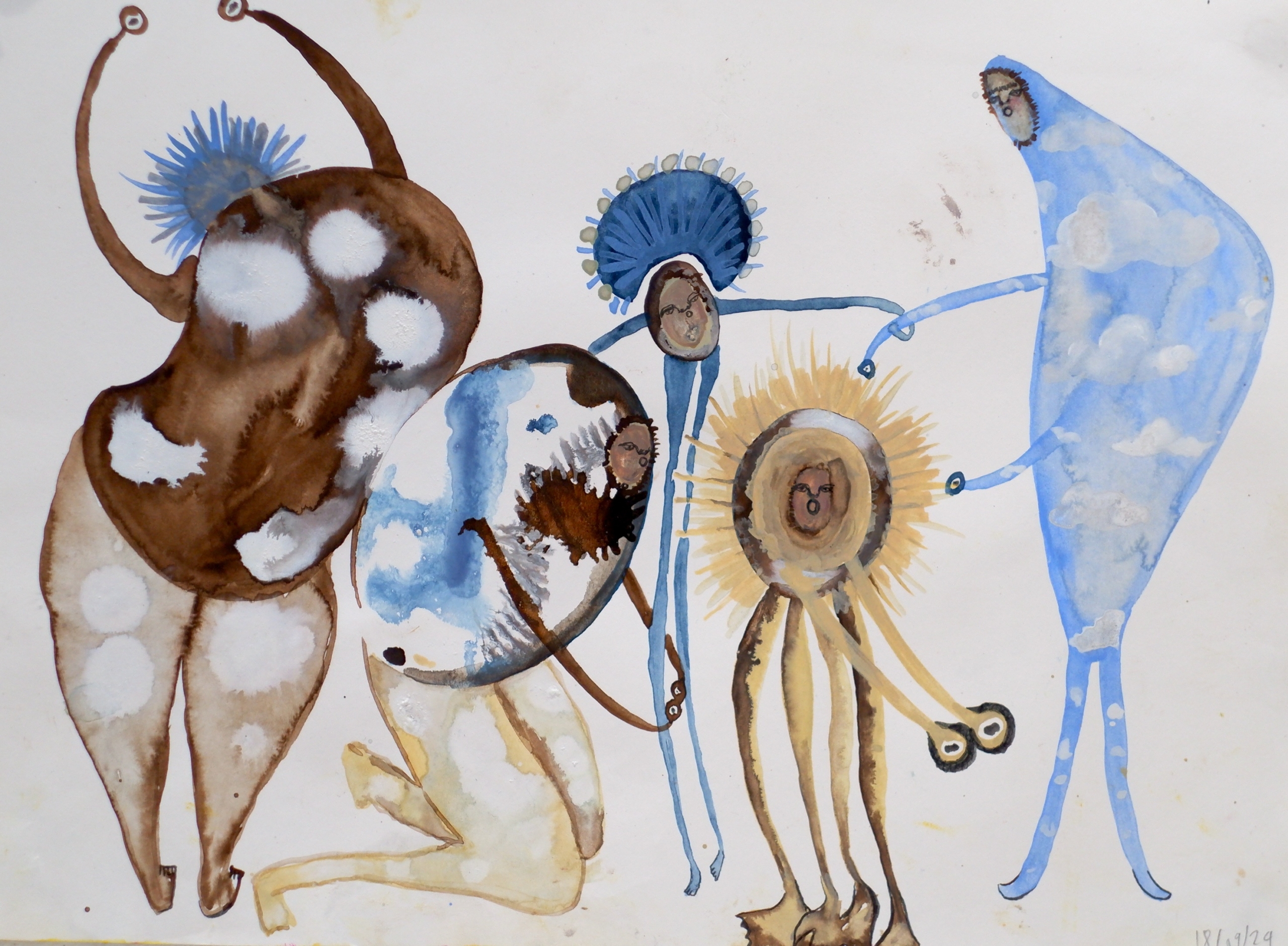
Names that create kinship with animals and generate food taboos. Bodies composed of plants and bird feathers. Among the Mẽbêngôkre, an Indigenous people who inhabit the banks of the Xingu River in the Brazilian Amazon, a people’s relationship with the territory they inhabit goes far beyond metaphor. Mẽbêngôkre culture establishes continuity between humans and non-humans, giving rise to the idea of territory as a dual process. Vinciane Despret describes this dynamic in Living as a Bird: the population leaves its mark on the land, and the land leaves its mark on the population; the “self” and the “non-self” mix, and body and space lose their boundaries.
Mẽbêngôkre culture establishes continuity between humans and non-humans, giving rise to the idea of territory as a dual process.”
Many elements of Mẽbêngôkre culture were obtained from outside the human community. A political and spiritual leader (wayanga) has the power to talk to animals, plants, and elements of nature. From them, the spiritual leader obtains rituals, names, words, songs, dances, and paintings that are integrated into Indigenous culture. Some of these elements—such as names and body adornments—establish a continuous relationship with other beings, creating a more-than-human conception of being, or ontology.
Names that make kin
In her book Morte e Vida de uma Sociedade Indígena Brasileira, Lux Vidal identifies two types of names among the Mẽbêngôkre: “common names” (idji kakrit) and “beautiful names” (idji mei). Ceremonies use only beautiful names, which are typical among animal species: among the beautiful male names are Bep, a fish name; Tokok, a typical name among pigs; and Katob, typical of monkeys. Some of the beautiful female names are Kôkô, also common among monkeys, and Ngrei, related to tapirs.
In general, humans can eat all kinds of game—but not the animals with which they share a name. Thus, a man named Bep, which is the name of a fish, cannot eat certain species of fish; a woman named Kôkô, which is the name of a monkey, cannot eat monkey meat. Eating an animal that shares the same name could, in the words of the thesis by Elizabeth Vidal Giannini, A ave resgatada: a impossibilidade da leveza do ser, be interpreted as an act of “endocannibalism” or an “incestuous relationship.”
Plants that anchor the soul
Mẽbêngôkre body painting also develops more-than-human relationships. Lux Vidal mentions two types of paints made from local plants: black jenipapo paint and intense red urucum paint. These two types of paint can create countless patterns, each of which signifies a different stage of life and a different hierarchical level. Though mẽbêngôkre body paintings were initially interpreted solely from a social perspective, they have recently been analyzed by anthropologists from a spiritual, biological angle.
Mẽbêngôkre body painting is not merely an art form but plays a role in the creation of the body. It is not merely a matter of establishing social relationships with beings that are more than human but of recognizing that these beings are part of the very composition of each individual’s body.”
According to André Demarchi, in his text Figurar e desfigurar o corpo: peles, tintas e grafismos entre os Mẽbêngôkre, urucum paint keeps the soul (karon) inside the body, while jenipapo paint protects the body against invasion by spirits or other souls. For the Mẽbêngôkre, going too long without jenipapo and urucum paint is not just inappropriate from an aesthetic or social point of view: it is a question of life and death. Going without body paint can cause the soul to leave the body or allow external spirits to invade the body. Both would result in death. In the documentary Me’ôk by Fábio Nascimento and Thiago Oliveira, a Mẽbêngôkre woman says: “We don’t grow up alone, we grow up with jenipapo paint and with the adornments made by our mothers.” The paint is both root and bark.
Mẽbêngôkre body painting is not merely an art form but plays a role in the creation of the body. It is not merely a matter of establishing social relationships with beings that are more than human but of recognizing that these beings are part of the very composition of each individual’s body. According to Mẽbêngôkre cosmology, life can only exist if the body is also composed of jenipapo and urucum.
The body is earth
Through beautiful names and body paintings, the Mẽbêngôkre establish more-than-human relationships with their territory and with the other beings that inhabit it. If “beautiful names” create kinship ties with animals and inspire an ethic of care through food taboos, body paintings go even further. They make plants a constituent part of Mẽbêngôkre corporeality.
The “beautiful names” point to the need to become kin, as Donna Haraway explains in Staying with the Trouble: Making kin in the Chthulucene. For the philosopher, kinship relations can go beyond blood ties: they are relationships of care. Body paintings, on the other hand, demonstrate the body as a “sympoiesis”—not a “humanity,” but a “humusity.” While the idea of “humanity” views humans as separate from other beings, the concept of “humusity” proposes a vision of humanity as a collection of organic matter composed of other beings—in other words, an intertwining of different forms of life. For the Mẽbêngôkre, everything is body: names, plants, eggshells, feathers. This is what I have called, in Portuguese, “corporalidade, corp-oralidade, corp-alteridade” (corporeality, body-orality, body-alterity).
While the idea of “humanity” views humans as separate from other beings, the concept of “humusity” proposes a vision of humanity as a collection of organic matter composed of other beings—in other words, an intertwining of different forms of life.”
Contemporary threats and territorial defense
Ten years ago, the Belo Monte Hydroelectric Plant caused severe environmental damage to human communities, fish, and other species. In March 2026, a new threat emerged: a gold mine project run by the Canadian company Belo Sun. The proposed mine sparked enormous controversy following protests by Indigenous women.
The Mẽbêngôkre’s opposition to large-scale projects that devastate their territory must be understood within their larger cosmological framework. In a world where animals are kin and plants help build the body, opposing environmental devastation is not merely about protecting a specific location. When the Mẽbêngôkre defend their territory, they defend more than the space where they live: they defend their kin, they defend their bodies, they defend their lives.

